
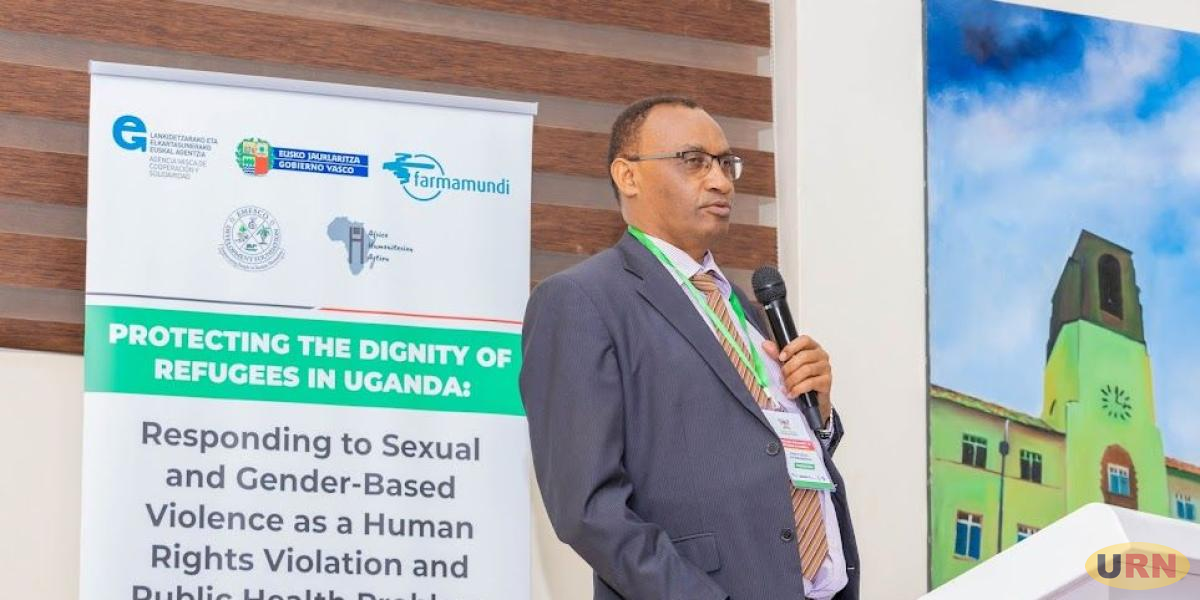
Providers of family planning services in refugee-hosting health facilities are calling for professional interpreters, saying language barriers are compromising care and preventing refugees from making informed contraceptive choices.
Speaking at a stakeholders’ dialogue organized by Makerere University School of Public Health (MakSPH) on sexual and reproductive health in refugee settings, Maria Goretti Kemirembe, a family planning coach at Kampala Capital City Authority (KCCA), said health workers often struggle to communicate with their clients.
She cited Kisenyi Health Centre IV, one of Kampala’s busiest public facilities, which serves an estimated 40,000 refugees each year — mainly from the Democratic Republic of Congo, Somalia, and South Sudan.
“With only one interpreter at the facility, communication becomes nearly impossible whenever he is absent,” Kemirembe said. “We end up using gestures or guessing what clients mean, which leads to incomplete medical histories and misunderstandings about contraceptive options.”
Her remarks followed the presentation of new research by MakSPH highlighting persistent gaps in access to sexual and reproductive health services in refugee-hosting areas. The studies found that language barriers and limited awareness of available services remain among the biggest obstacles, even though refugees are legally entitled to use the same health facilities as host communities.
Robert Andeoye, Settlement Commandant for Adjumani District, said the findings would help planners target interventions where they are most needed, especially as donor funding for refugee programs declines. “Women are disproportionately affected,” he said, adding that more awareness is needed to prevent sexual and reproductive rights abuses.
Lucia Santolaria, a programs officer with Farmamundi, a Spanish NGO providing health and humanitarian support in Kampala, Kyaka, and Adjumani, said they are conducting a needs assessment to identify critical service gaps.
She noted that while the organization already provides mental health support, sexual and gender-based violence prevention, and livelihood programs, translation services still depend on refugee volunteers. “We urgently need structured interpretation support to ensure that care is equitable and informed,” she said.
