
Several sickle cell patients enrolled in the clinic at Lira Regional Referral Hospital (LRRH) are going without Hydroxyurea, a key crisis-management drug that helps prevent severe complications.
Hydroxyurea is a disease-modifying medication for sickle cell anemia that reduces painful crises, hospitalizations, and acute chest syndrome. It works by increasing fetal hemoglobin (HbF), making red blood cells larger, rounder, and more flexible to prevent them from sickling.
Records show that at least 1,500 children and young adults from across the Lango subregion are enrolled in the hospital’s sickle cell clinic. But Dr. Andrew Odur, acting director of LRRH, said not all patients are currently receiving treatment due to shortages.
Earlier this week, the hospital received 200,000 doses of Hydroxyurea to boost care and treatment for patients, though demand remains high.
Lango subregion has the highest sickle cell disease prevalence in Uganda — 21 percent, compared with the national average of 13 percent. Each year, an estimated 20,000 Ugandan children are born with sickle cell disease, and without timely diagnosis and care, up to 80 percent die before age 5.
Dr. Odur said the hospital has established a wellness clinic and laboratory to support early screening and disease prevention in the region.
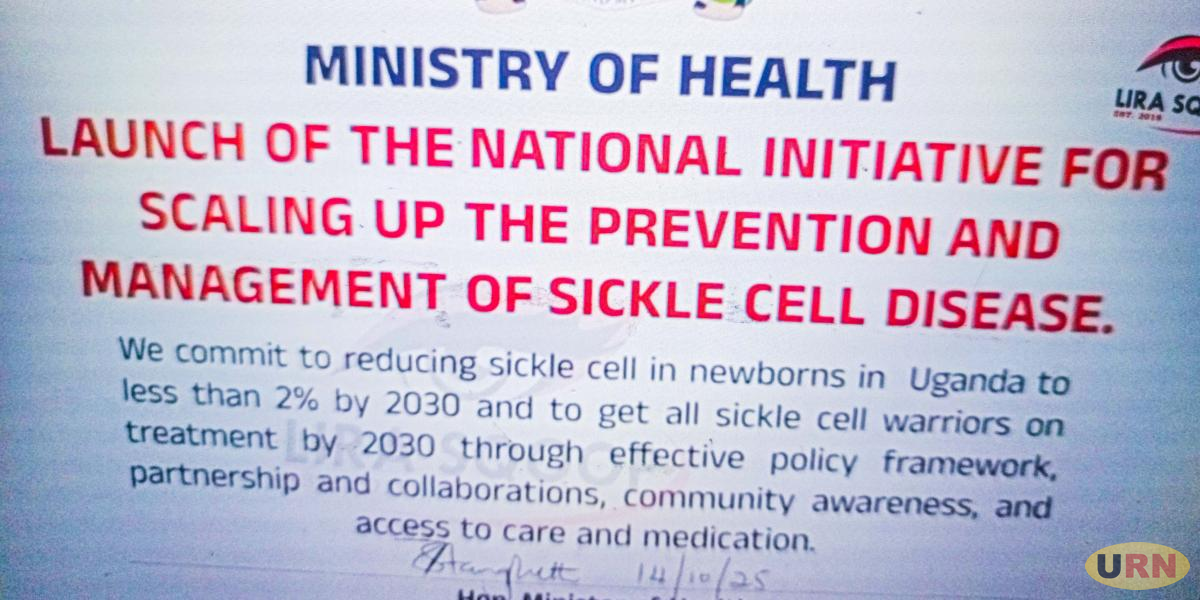
On Tuesday, the Ministry of Health launched a national initiative to scale up prevention and management of sickle cell disease at a function in Lira City. The program aims to mobilize sustainable financing, strengthen leadership, and align private investment to build long-term national capacity.
Health Minister Dr. Jane Ruth Aceng Ocero, who also serves as Lira City Woman MP, said the effort is not just about funding. “I am directing the Director General of Health Services to appoint a national task force to draft a policy framework for the prevention and treatment of sickle cell disease — to make it not a sentence of suffering, but a story of hope,” she said.
Dr. Aceng also urged community members and young couples to embrace early screening as a preventive measure. So far, 7,500 learners from 12 of 22 schools across Lango have been screened in recent months.
At the same event, the minister launched citizen-led task forces to strengthen government efforts and commissioned a new wellness clinic laboratory at LRRH to support the region.
Dr. Odur said these initiatives will improve early diagnosis and treatment even at lower-level health facilities.
Acknowledging the disease’s high burden in Lango, Geoffrey Ocen Abia, a clan head and Deputy Minister of Health under the Lango Cultural Institution, announced plans to introduce a bylaw requiring couples to undergo sickle cell screening before marriage.
Uganda was the first country in sub-Saharan Africa to collect national sickle cell prevalence data, enabling targeted newborn screening in high-burden regions. More than 100 public health facilities now run sickle cell clinics and participate in newborn screening under the Ministry of Health’s noncommunicable diseases program.
