
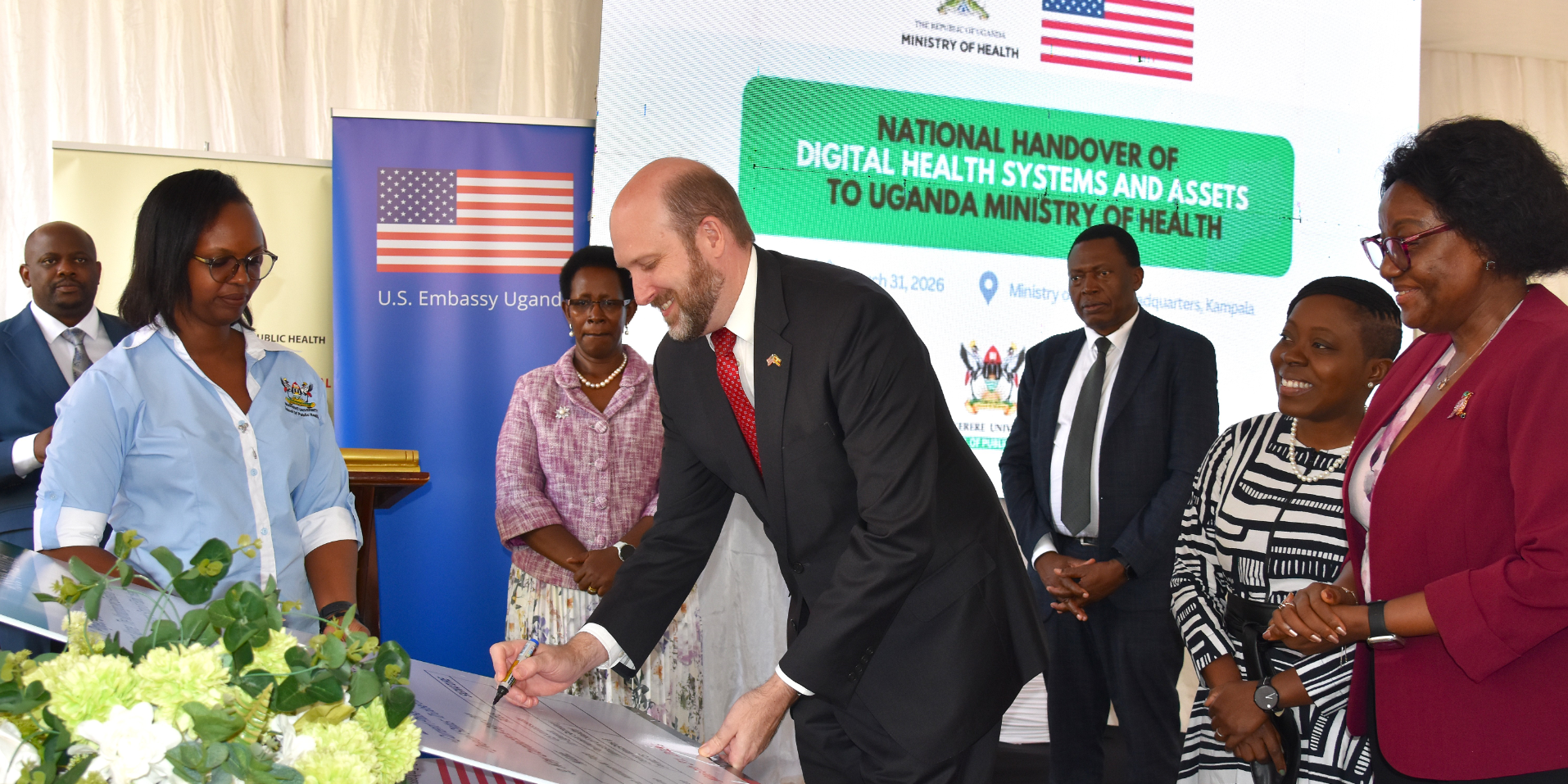
The United States government has transferred more than $100 million worth of digital health infrastructure to Uganda, in a move aimed at strengthening health security and advancing national self-reliance.
The handover, which took place at the Ministry of Health Uganda in Kampala on March 31, includes digital health platforms, data systems, equipment, and select personnel to support the country’s health information systems.
The transfer forms part of a five-year U.S.–Uganda Health Memorandum of Understanding signed in December 2025, under a strategy focused on building resilient, locally owned health systems.
“A stronger health system in Uganda protects both Americans and Ugandans,” said William W. Popp. “When countries can detect and respond to disease threats quickly, it reduces the risk of those threats spreading across borders.”
The milestone marks the culmination of 15 years of U.S. support through the Monitoring and Evaluation Technical Support (METS) programme, implemented by the Makerere University School of Public Health.
Between 2010 and 2026, the Centers for Disease Control and Prevention invested nearly $104 million to strengthen Uganda’s HIV response and modernise national health information systems.
The assets handed over include 725 servers, more than 4,700 computing devices, solar power systems for nearly 800 health facilities, and network connectivity equipment for over 1,300 sites. The package also covers upgrades to regional referral hospital networks and video conferencing systems.
With the transition, the Ministry of Health assumes full ownership and management of Uganda’s digital health platforms—a shift officials say will improve sustainability and national control of critical health data systems.
The transfer follows a broader $2.3 billion, five-year health agreement between the two governments, aimed at supporting life-saving services, strengthening health systems, and ensuring accountability in the use of public resources.
Officials say the move positions Uganda to better detect, monitor, and respond to disease outbreaks while reducing long-term dependence on external support.
