
Adopted from Parliament Watch
https://www.parliamentwatch.ug/news/parliament-blocks-premature-funding-for-dei-biopharma
A plan by the Government of Uganda to inject an additional US$434 million (about Shs1.74 trillion) into Dei BioPharma has come under renewed parliamentary scrutiny, with legislators questioning whether to commit more public money before establishing the value of its existing investment, documenting its shareholding and accounting for funds already disbursed.
The challenge emerged during a plenary debate on 7 October 2026, when Deputy Speaker Thomas Tayebwa questioned a recommendation by the Committee on Presidential Affairs to secure additional financing for the pharmaceutical manufacturing project, warning that Parliament could not endorse payments while essential procedures remained unresolved.
“You’re saying pay when you’re bypassing the processes,” Tayebwa told the House.
The dispute centres on a fundamental question of public investment: how can Parliament confidently authorise further financing for a privately operated company when its own committee reports that evidence of the Government’s reported 9.4 per cent shareholding was not presented during its assessment?
For the Leader of the Opposition, Joel Ssenyonyi, the apparent contradiction undermines the case for additional funding. He argued that the Government should first establish what it owns, what the company is worth and what the taxpayer has received in return for the money already committed.
“You’re saying there is no proof of government shareholding, but you’re saying government should inject a lot more money. This is extremely confusing,” Ssenyonyi said.
His intervention turned the debate from the urgency of completing a pharmaceutical manufacturing facility to the accountability conditions under which the State should finance private enterprise. The scale of the existing investment explains the intensity of the scrutiny.
According to the Presidential Affairs Committee’s report, presented by its chairperson, Martin Mapenduzi, the Government has committed Shs723.4 billion to Dei BioPharma in three principal tranches: Shs70 billion in the 2023/2024 financial year, a further Shs75 billion in December 2023, and Shs578.4 billion through a supplementary budget in the 2024/2025 financial year.
The committee reported that the Government was understood to hold a 9.4 per cent stake in the company but that documentary proof of the shareholding was not presented during its assessment. It consequently recommended that the Government provide clear documentation of its shares, expected returns, project deliverables and performance targets.
Former Science, Technology and Innovation Minister Dr Monica Musenero responded during the debate that she had received copies of the share certificates shortly before entering the House.
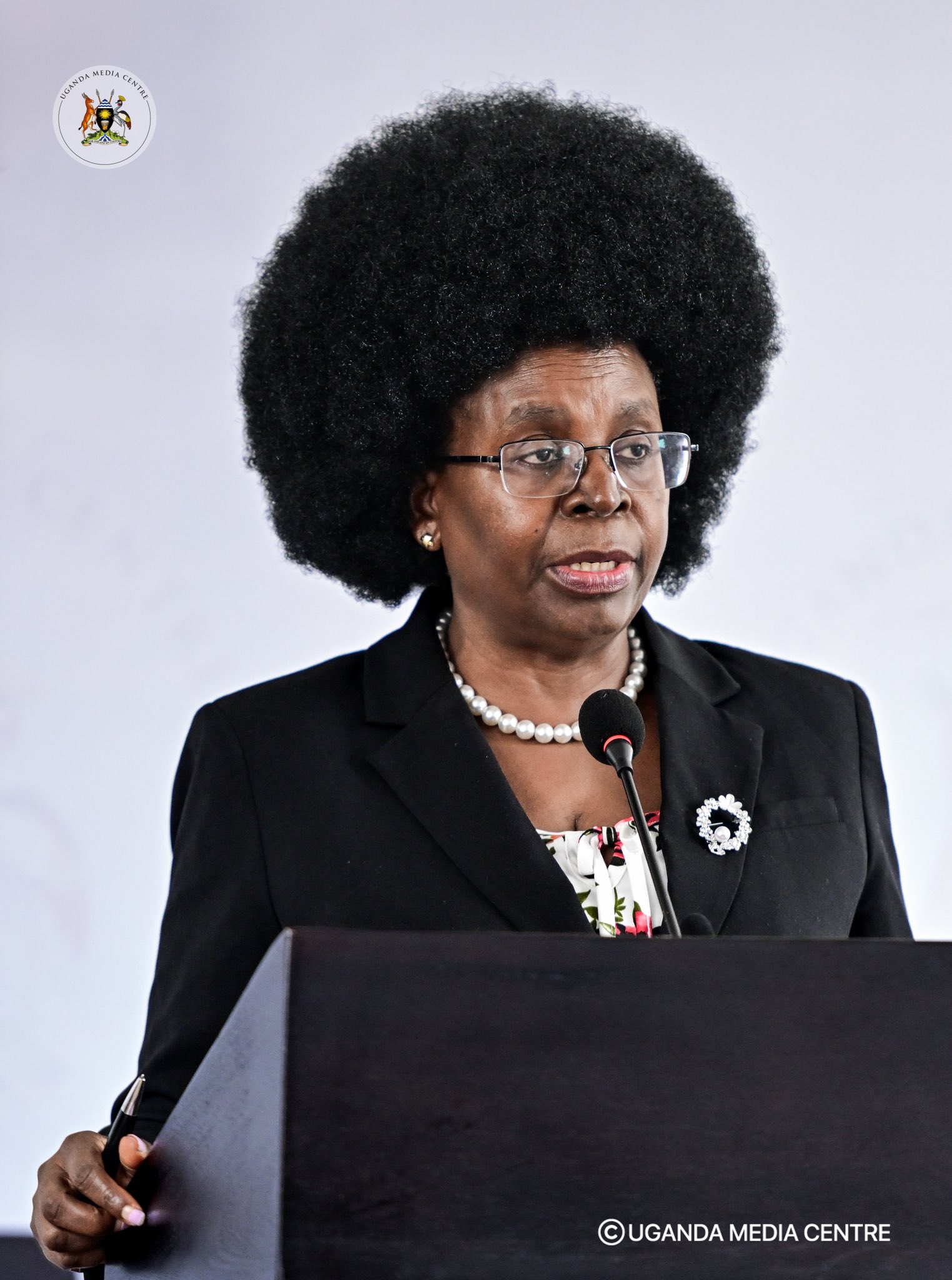
“I’ve got the copies of the certificates,” she told legislators, indicating that she would print and present them.
Her response introduced a potentially significant development, but the documents’ existence and contents would need to be established through formal tabling and scrutiny. The outstanding questions include whether the certificates correspond to the full amount invested, whether the shares were validly allotted and registered, and what contractual rights and obligations attach to the Government’s stake.
For Parliament, documentary verification is only the starting point. Evidence of share ownership does not, by itself, establish that the investment was fairly priced, commercially sound or capable of delivering the public benefits used to justify the expenditure.
Ssenyonyi argued that the Government had committed substantial resources before demonstrating the company’s value through an independent valuation.
Recalling the earlier parliamentary approval of funding for Dei BioPharma, he questioned the sequence in which the transaction was handled.
“How do you know the stake you’re buying?” he asked, warning that once public funds had been approved and disbursed, Parliament’s practical ability to influence the terms of the transaction could diminish.
He called for a value-for-money audit of the money already invested before any further allocation was considered.
“Before you can think about asking for more money, trillions of shillings for them, can we have a value-for-money audit of the money that has already been given?” he asked.
The concern is not merely whether the pharmaceutical facility has been constructed. It is whether the price paid for the Government’s equity was justified, whether the funds were used for their approved purposes, and whether the State obtained ownership rights and economic benefits commensurate with its contribution.
Budadiri County East MP Julius Nakiyi made a similar case for a fresh valuation.
Using the reported Shs723.4 billion investment and 9.4 per cent shareholding, he argued that the figures implied a total equity valuation of approximately Shs7.7 trillion. He questioned whether the contributions of the private shareholders justified their reported 90.6 per cent ownership.
“The argument is these people might have overvalued their company so that they dilute the shareholding of government,” Nakiyi said.
“We need a resolution in this Parliament that we revalue this company. Then we determine the true value of government shareholding in this entity.”
The implied Shs7.7 trillion figure is a mathematical inference from the reported investment and equity percentage, not an independently established valuation of Dei BioPharma. It assumes that the entire Shs723.4 billion represents the purchase price of an ordinary equity stake of exactly 9.4 per cent on a comparable valuation basis.
The actual valuation could differ depending on the share classes, transaction terms, liabilities, asset values and the basis on which the Government’s interest was calculated.
An independent valuation would therefore need to establish the company’s financial position and the basis for the original transaction, rather than simply extrapolate a total value from the reported shareholding.
The concerns raised in Parliament are not entirely new. In his report to Parliament for the financial year ended 30 June 2024, Auditor General Edward Akol identified weaknesses in the documentation supporting the Government’s investment in Dei BioPharma.
The audit reported that a valuation report and audited financial statements had not been provided to establish whether the Government’s investment was equivalent to the value of the shares allocated. It also identified the absence of a shareholder agreement and share certificates at the time of the audit, recommending that the Ministry of Finance engage the Attorney General and the company to address the outstanding documentation and mitigate potential legal risks.
These findings provide an important historical benchmark for assessing whether the deficiencies identified during the earlier audit have since been resolved. They do not, on their own, establish that the same documentation remains unavailable today; that requires an updated examination of the records and the Minister’s promised certificates.

The Public Finance Management Act, 2015 provides the statutory framework for transparent budgeting, expenditure authorisation, financial reporting and internal controls over public resources. Its provisions on appropriations and public financial management reinforce the need to establish the legal and financial basis for public spending.
For the Dei BioPharma transaction, Parliament’s task is to determine whether the approvals, disbursements, equity acquisition and contractual arrangements complied with the applicable legal and financial requirements, and whether the public investment can be shown to deliver value.
The accountability debate, however, does not erase the Government’s stated industrial and public-health rationale for the investment.
Dei BioPharma operates a 150-acre pharmaceutical manufacturing complex in Matugga, Wakiso District. The facility is intended to produce a range of products, including generic medicines, vaccines, injectables, oncology medicines, penicillin and medical devices.
The Presidential Affairs Committee reported that the company produced and distributed six generic medicines in the 2024/2025 financial year, including paracetamol, tramadol, metformin, doxycycline and metronidazole. Several specialised production lines were still undergoing installation, validation or commissioning, leaving the facility operating below its envisaged capacity.
The committee argued that further investment was needed to complete and operationalise the plant, strengthen domestic pharmaceutical manufacturing, reduce dependence on imported medicines, create jobs and support exports.
It recommended that the Ministry of Finance, Planning and Economic Development secure the additional US$434 million. It also called for reliable electricity supply of up to 100 megawatts and adequate water infrastructure, noting the facility’s reported requirement of between seven million and 10 million litres of water a day at full operational capacity.
These requirements underline the scale of the undertaking. Completing the plant would involve not only financing buildings and production equipment but also ensuring that utilities, manufacturing systems, regulatory validation, supply chains and commercial operations can support sustained production.
The committee’s case raises a legitimate policy question: whether withholding additional financing without a credible completion plan could leave a substantial public investment underutilised.
But the opposite risk is equally important. Releasing further money without a verified financing plan, clear ownership rights, independent cost assessment and measurable milestones could expose taxpayers to escalating commitments without sufficient assurance that the project will deliver its promised benefits.
The central issue is therefore not simply whether Dei BioPharma deserves support, but what evidence and conditions should govern any further public financing.
Concerns about public investment in Dei BioPharma extended beyond valuation and ownership to the Government’s wider approach to supporting private enterprise.
Martin Kasule Mugabi, the MP for Buzaaya County, questioned whether the Government’s financial contribution was reflected fairly in the reported shareholding arrangements.
“You find government has invested 100 billion, the investor has only invested 5 billion, but the government [has] only 5% shares. This is not realistic,” he said.
His example was an illustration of the concern he was raising, rather than a verified account of Dei BioPharma’s precise capital contributions. Nevertheless, it highlighted the need for a transparent assessment of how public and private contributions are valued when equity is allocated.
Patrick Oshabe Nsamba, chairperson of the Public Accounts Committee for Central Government, warned that repeatedly directing taxpayer support towards selected companies could disadvantage other businesses facing similar financial pressures without comparable access to public financing.
“Numerous companies also require bailout from government. Why does government continue to bail out these same companies which are problematic, but there are other genuine businesses which are saying we are also struggling?” he asked.
He added: “We are killing the private sector, we are killing innovation in the name of promoting innovation.”
Oshabe also cautioned that parliamentary committees “should never ever be used as public relations teams for these companies”, arguing instead for an open and competitive innovation fund.
The concern speaks to a broader industrial-policy dilemma. Governments may reasonably support research, technological development and industries considered strategically important, particularly where the upfront costs are high or the private sector is unable to finance projects with long investment horizons.
However, such interventions need transparent eligibility criteria, clear public-interest objectives and safeguards against preferential treatment. Without them, public support risks distorting competition by giving selected companies financial advantages unavailable to otherwise viable businesses.
An open innovation fund, as proposed by Oshabe, could provide one alternative, although its effectiveness would depend on sound selection criteria, independent technical assessment, transparent awards and monitoring of results.
The debate also drew attention to Inspire Africa Coffee, another enterprise covered in the Presidential Affairs Committee’s report.
Ssenyonyi questioned why the committee recommended that the Government table the contractual and financing framework governing its relationship with the company while also proposing that the State front-load US$250 million, approximately Shs1 trillion, into the project.
“When you go to Inspire Africa Coffee, the first recommendation [is that] government should table before Parliament the contractual and financing framework,” he said.
“On the next page, they are recommending government should front-load adequate capital of 250 million US dollars. Why is the committee confusing us?”
The two recommendations raise a question about sequencing: should Parliament first establish the terms of the Government’s relationship with an enterprise before considering a substantial additional capital commitment?
The answer matters because a contractual framework should clarify the parties’ respective obligations, the purpose and terms of public financing, the allocation of risks, expected returns and the circumstances under which further funding may be released.
The proposed amounts for the two companies are substantial. The US$434 million requested for Dei BioPharma and the US$250 million proposed for Inspire Africa Coffee together amount to US$684 million, or approximately Shs2.74 trillion using the rounded exchange-rate assumptions in the proposals.
That combined figure describes the scale of the recommendations under debate; it should not be interpreted as evidence that Parliament has approved or the Government has already disbursed the additional funds.
For both enterprises, the accountability test is whether the proposed financing is supported by a documented business case, legally sound agreements, realistic implementation plans and measurable public benefits.
The debate points towards a set of practical questions that Parliament and the relevant oversight institutions must resolve before further commitments are made.
First, the Government should formally present the share certificates and associated corporate records for Dei BioPharma, including the relevant share-allotment documents and shareholder agreement. These should establish the nature, proportion and rights attached to the State’s interest.
Second, an independent valuation should establish the company’s financial position and provide a defensible basis for assessing the amount invested, the equity received and the terms of any proposed additional investment. The assessment should consider the company’s assets, liabilities, existing operations, production capacity and realistic commercial prospects.
Third, the Government should account for the Shs723.4 billion already committed. This requires a review of disbursements, expenditure records, procurement, debt obligations and the assets or operational capabilities financed. A value-for-money assessment should examine both financial stewardship and measurable results.
Fourth, the proposed US$434 million should be supported by a detailed completion and financing plan, with independently verifiable milestones. Any additional disbursement could then be linked to agreed deliverables, clear responsibilities, realistic timelines and reporting requirements.
Fifth, Parliament should establish how the Government intends to protect the public interest if the company fails to meet its targets. That includes clarifying governance rights, monitoring arrangements, the treatment of future capital contributions and the consequences of non-performance.
The same principles should apply to Inspire Africa Coffee. Its contractual and financing framework should be available for parliamentary scrutiny before legislators are asked to endorse further public capital.
These safeguards would not automatically rule out additional investment. Rather, they would provide Parliament with the evidence needed to determine whether further support is justified and on what terms.
Uganda’s ambition to develop domestic pharmaceutical manufacturing and strengthen science-led industrialisation is significant. A functioning pharmaceutical plant could contribute to medicine security, skilled employment, industrial capacity and reduced dependence on imported products.
But strategic importance cannot substitute for financial accountability. Nor does a large initial investment, by itself, establish that a project is commercially viable or that further funding will produce the anticipated returns.
The Government’s immediate challenge is to demonstrate that the outstanding questions about Dei BioPharma’s shareholding, valuation and previous expenditure can be answered with verifiable evidence. The company, for its part, must be assessed against clear operational and financial benchmarks, rather than the scale of its stated ambitions alone.
The Minister’s undertaking to present the share certificates may help resolve one part of the dispute. It will not, on its own, settle the broader questions about valuation, contractual protections, value for money or the amount needed to complete the facility.
Parliament must ultimately weigh the risk of leaving a major public investment underutilised against the risk of committing more taxpayer funds without adequate safeguards. The decision should rest on evidence about the company’s ownership, financial position, completion costs and expected public benefits, not on urgency alone.
