
Adopted from PARLIAMENT WATCH UGANDA
President Yoweri Museveni has pledged to expand specialised healthcare for growing elderly population in Uganda by sponsoring, training and deploying geriatricians to district hospitals, turning a longstanding policy commitment to older persons into a proposed nationwide medical programme.
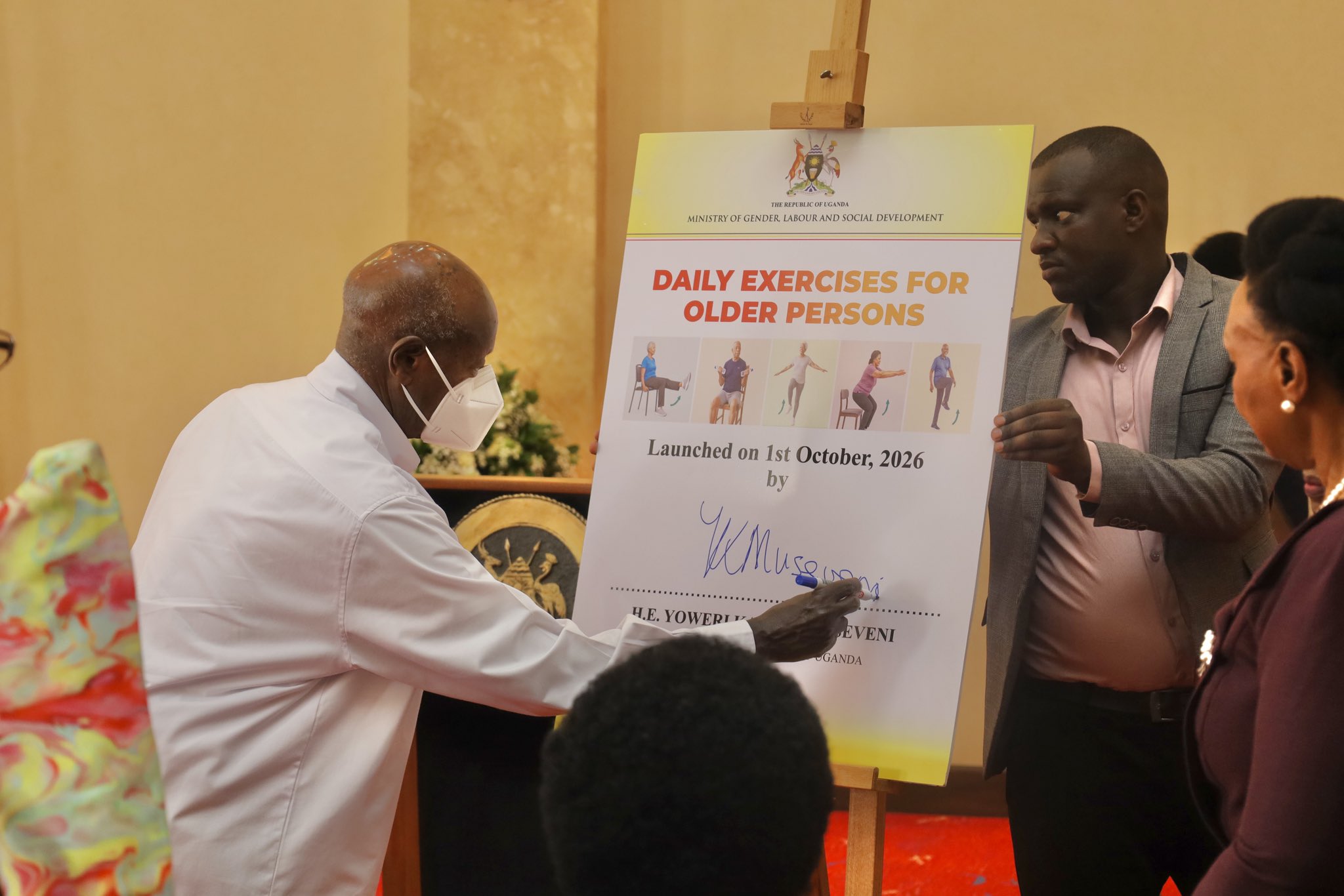
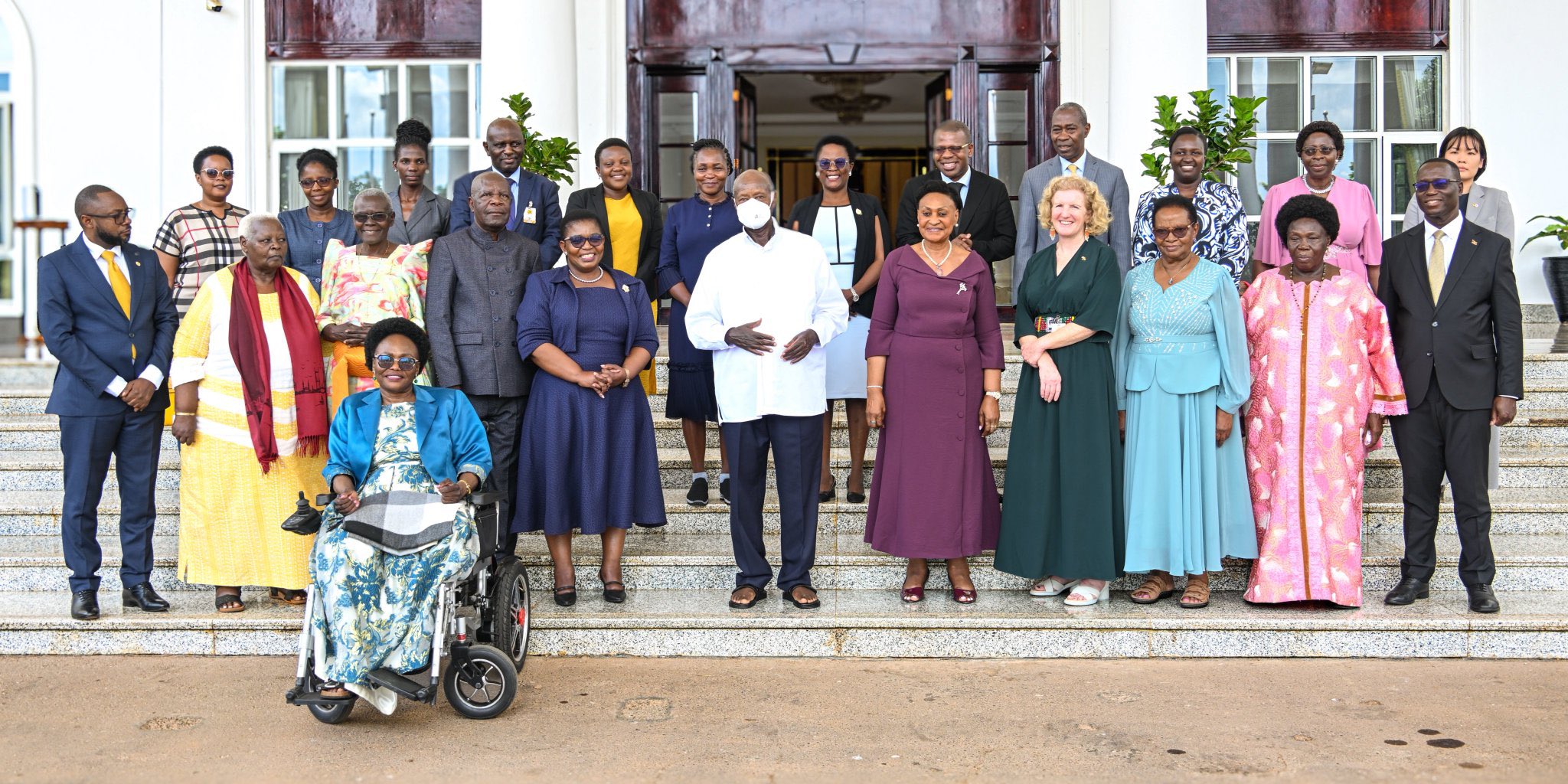
Speaking on Thursday at State House, Entebbe, during the commemoration of the International Day of Older Persons, Museveni said government should train specialists specifically equipped to manage the health conditions associated with ageing and make their services available to older citizens without charge.
“Older people are most affected by medical conditions and expenses. It is, therefore, my view that the government should sponsor and recruit a geriatrician in each district to offer free and consistent medical support to the elderly,” Museveni said.
The proposal would represent a substantial expansion of geriatric care in Uganda. Government figures cited during this year’s commemoration indicate that the country currently has only one government-employed geriatrician and four social gerontologists serving an estimated 2.6 million people aged 60 and above.
Museveni’s proposal therefore goes beyond creating a new specialist service. It raises questions about whether Uganda can train enough doctors, finance their employment, retain them in the public sector and equip district hospitals to provide the wider package of care required by an ageing population.
The 2024 National Population and Housing Census put the number of Ugandans aged 60 and above at about 2.3 million, or roughly five percent of the population. Ministry projections put the figure at approximately 2.6 million by 2026, with the older population expected to continue expanding significantly in coming decades.
That demographic transition is changing the demands placed on the health system. Older people are more likely to require long-term management of conditions such as hypertension, diabetes, arthritis and other non-communicable diseases.
They may also require coordinated treatment for multiple conditions, rehabilitation, nutritional support, mental-health services and assistance with mobility and daily living.
Geriatric medicine is designed around precisely those needs, focusing not simply on individual diseases but on the broader health and functional needs of older people.
Museveni said the government should provide scholarships for doctors to specialise in the field, indicating that the proposed district network would have to be built through a pipeline of new specialists rather than by immediately reallocating an existing workforce.
The ambition, however, comes against a much wider shortage of health workers. Uganda’s National Human Resources for Health dashboard reported 63,656 active health workers and 3,695 registered health facilities as of September 28, 2026, covering 143 districts.
The World Health Organization has also identified major gaps in Uganda’s public-sector health workforce.
A WHO assessment published in July found that only 34 percent of approved public-sector health positions were filled, leaving a 66 percent vacancy rate, largely because of fiscal constraints.
Government increased health-worker wage allocations from Shs1.14 trillion in financial year 2022/23 to Shs1.44 trillion in 2026/27, while an additional Shs41.2 billion was approved in April 2026 to recruit critical health workers.
That makes the geriatrician proposal a test not only of Uganda’s commitment to elderly healthcare, but also of its broader capacity to plan, finance and retain specialised medical personnel.
WHO’s 2026 regional health-workforce report identifies rapid population growth, changing disease patterns, fiscal constraints and competition for health workers as major pressures on African health systems.
For Uganda, the challenge is therefore twofold: producing specialists and ensuring there are funded positions and functioning facilities in which they can work.
The proposal is not without a legal and policy foundation. The Constitution of the Republic of Uganda specifically recognises the welfare of older persons.
Objective VII of the National Objectives and Directive Principles of State Policy states that “the State shall make reasonable provision for the welfare and maintenance of the aged.” The Constitution’s Article 32 also requires affirmative action for groups marginalised on the basis of age, among other grounds.
The National Council for Older Persons Act, 2013 subsequently established the National Council for Older Persons as a statutory body responsible for guiding, monitoring and advising stakeholders on services for older people.
Significantly, the legislation provides for a geriatrician experienced in managing diseases of older persons to serve on the Council.
Uganda also adopted the National Policy for Older Persons in 2009, establishing a policy framework around the welfare, participation, protection and empowerment of older people.
Museveni’s announcement therefore represents an attempt to operationalise an obligation that has existed within Uganda’s constitutional and policy architecture for years.
The President’s intervention also recognised that ageing is not solely a medical issue. Government says that older persons face significant gaps in health insurance, social security and protection from abuse.
The Ministry of Gender, Labour and Social Development estimates that about 95.5 percent of older persons have no health insurance, while older people receiving the Senior Citizens Grant spend more than 30 percent of their allowance on healthcare. The ministry also says Uganda has only one government geriatrician and four social gerontologists for the estimated 2.6 million older persons.
The ministry has separately raised concerns about elder abuse, including neglect, physical and emotional abuse, financial exploitation and land and property disputes.
Government figures cited ahead of the International Day of Older Persons indicate that 82 percent of reported perpetrators of elder abuse are relatives of older people.
The combination of healthcare costs, weak social protection and property insecurity means that a district geriatrician, while potentially significant, would address only one part of the challenge.
At State House, Museveni also announced plans to tailor the Parish Development Model (PDM) specifically for older persons to help them create and preserve wealth.
Under the existing PDM framework, older persons are allocated 10 percent of funds, alongside 30 percent for women, 30 percent for youth, 10 percent for persons with disabilities and 20 percent for other groups.
The National Council for Older Persons previously asked government to allow older people to organise themselves into special groups to improve their access to PDM resources.
Museveni said the elderly-specific intervention would be pursued after government completes its financial commitments related to the 2027 Africa Cup of Nations, which Uganda is co-hosting with Kenya and Tanzania. The timing, however, leaves the proposal dependent on future fiscal decisions.
Government is already operating the Social Assistance Grant for Empowerment (SAGE) for older and vulnerable citizens. The programme provided Shs25,000 monthly to eligible beneficiaries, with the Ministry of Gender indicating that the amount would rise to Shs35,000 in the 2026/27 financial year.
Government has also been implementing the Special Enterprise Grant for Older Persons, which supports groups engaged in agriculture and other income-generating activities.
The policy challenge is consequently shifting from whether older persons should receive support to how different programmes can be coordinated without leaving large sections of the population outside the safety net.
For Museveni’s geriatrician proposal to move beyond a presidential announcement, several questions will require concrete answers. How many doctors will be sponsored each year? Which universities will train them? How much will their training cost? Will every district receive a fully funded post?
Equually, what equipment and medicines will district hospitals need? How will geriatricians work alongside physicians, nurses, physiotherapists, social workers and community-health teams? And, perhaps most importantly, how will government retain specialists once they are trained?
These questions matter because Uganda’s experience with specialist healthcare is inseparable from its broader health-workforce constraints.
WHO has explicitly called for stronger coordination between health-worker planning, education, employment, deployment and retention, warning that investments in training do not automatically translate into health services unless governments create sustainable employment and retention systems.
Government officials have argued that dignified ageing must extend beyond hospitals.
Minister of State for Elderly Affairs Jacqueline Mbabazi said older persons should not be regarded merely as beneficiaries of government programmes, but as farmers, professionals, entrepreneurs, caregivers, community leaders and custodians of knowledge and experience.
That approach places healthcare alongside economic empowerment, family support, social protection and protection against abuse.
Museveni similarly urged older people to protect and modernise the management of their assets, warning against excessive fragmentation of family property and encouraging approaches such as shareholding and other modern forms of wealth management.
He also called on families and local leaders to respect older people and protect their dignity and property.
The emphasis reflects an increasingly important reality: older Ugandans are not simply recipients of state assistance. Many remain responsible for households, agriculture, childcare and community leadership.
Government figures cited during this week’s commemoration indicate that households headed by older persons support millions of dependants, including orphans and vulnerable children.
Museveni’s proposal places geriatric medicine at the centre of Uganda’s response to an ageing population.
But the significance of the announcement will ultimately depend on whether it produces a measurable expansion of services.
A geriatrician in every district would require sustained investment in specialist training, salaries, infrastructure, medicines and multidisciplinary care. It would also require Uganda to address the workforce shortages that already affect the wider public health system.
For older Ugandans, the distinction between a policy announcement and a functioning service is straightforward.
It is the difference between being told that specialist care will come and actually finding a qualified doctor at a district hospital when illness strikes. The country’s ageing population is making that distinction increasingly important.
The country now has an opportunity to convert a constitutional commitment to the welfare of older persons into a measurable national health programme. The immediate benchmark will be whether the proposed scholarships, recruitment plans and district deployments are backed by budgets, posts and services.
The presidential pledge has set the target. The health system in Uganda will now be tested on whether it can build the workforce to reach it.
