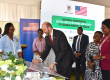
The Ministry of Health (MOH) has begun integrating nineteen field epidemiologists who recently graduated from a United States-funded training program for epidemiologists and laboratory experts.
Field epidemiologists are specialized health professionals trained to detect, investigate, and control disease outbreaks. Uganda has faced recurring epidemics, including Ebola, cholera, and COVID-19, highlighting the need for skilled professionals to strengthen disease surveillance, outbreak response, and public health preparedness.
The US-funded training program aims to build local capacity and ensure Uganda has a sustainable workforce to respond to current and future public health challenges.
Dr. Daniel Kyabayinze, Director of Public Health at the Ministry of Health, said that although these specialists graduated last week, the government has already started a validation exercise to absorb those who have been working in critical areas and employed by various NGOs.
Under a five-year, 8.74 trillion shilling Memorandum of Understanding (MOU) signed in December, Kyabayinze said the government committed to a clause requiring the absorption of all frontline healthcare workers trained under US-funded programs.
The US Centers for Disease Control and Prevention (CDC) began funding this two-year fellowship program, run by the National Institute of Public Health, in 2015.
So far, up to 130 experts—trained to handle the incidence, distribution, and control of emerging and re-emerging diseases—have completed the program.
According to Dr. Ario Alex Riolexus, Director of the institute, the unit cost of training one professional is approximately 380 million shillings.
Kyabayinze noted that not all 130 trained specialists are currently employed within the government, as some have moved to work elsewhere internationally. He added that it will take the government up to 20 years to obtain a sufficient number of such experts.
Meanwhile, US Ambassador to Uganda William W. Popp said the United States is currently assessing the impact of previous cohorts in strengthening public health, making Uganda, the US, and the world safer.
He noted that this assessment coincides with the US marking its 250th anniversary, reflecting on areas where its collaborations have been most impactful. He further highlighted changes in public health cooperation between the two countries, noting that Uganda has committed to increasing public health financing, including in surveillance, human resources, and health system development.